
Why NoMoCo
NoMoCo's pillow support system kits were designed as head restraint kits due to a crucial need by researchers in the field of neuroimaging (MRI, fMRI, PET, and SPECT) to collect accurate output data. Other devices, including bite bars, inflatable bead bags, head and neck braces, and polyurethane molded masks, have resulted in many failed attempts to collect quality image data with no movement. NoMoCo's pillow system provides the support, comfort and sensory feedback necessary to help researchers and technologists acquire more usable data due to the minimization of subject head movement. The kits can also be used for Computerized Axial Tomography exams.
The NoMoCo Pillow System
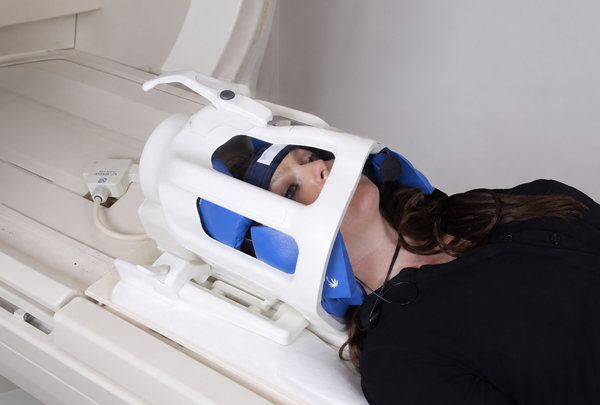
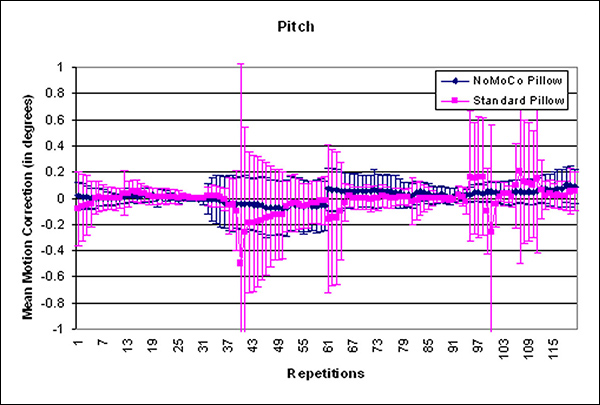
Access our comprehensive collection of research abstracts and clinical studies validating the effectiveness of the NoMoCo Pillow Support System in professional imaging environments.
About M.J. Meloy, Ph.D.
M.J. Meloy founded NoMoCo, Inc., to assist research groups around the country and the world in collecting neuroimaging data with minimal motion.
M.J. started out with a degree in radiologic technology and worked as a radiologic technologist in hospitals and clinics for over 25 years. In 1989, she went back to school and obtained a Master of Arts degree from Pepperdine University in Psychology in 1991. While obtaining her Master's degree, M.J. worked at the University of California, Los Angeles in the Neuropsychiatric Institute assisting a psychiatrist with measuring plaque size differences on MRI scans for subjects with Alzheimer's disease. At the same time, she continued to work in the field of radiology and was the Director of an imaging center, formerly known as the West Coast Spine Institute. In 1993, M.J. attended Arizona State University and obtained her Ph.D. in Psychology with plans to continue working in the field of neuroimaging research. It was during this time that the field became more widely accessible and imaging centers began to appear. She is a licensed clinical psychologist and a research scientist working on several grants to collect and analyze functional neuroimaging data at the University of California, San Diego, which has an imaging facility housing four research magnets.
Through the years, M.J. was struck by the limited number of available head restraint kits when conducting neuroimaging studies. Hospitals are also not equipped in their CAT or MRI scanners to provide patients with pillow systems to make their exam a more comfortable and positive experience. The patented pillow system she created is the only type of support that she found to work. M.J. has received tremendous encouragement from her colleagues regarding this product's development, and she is proud to associate her name with it and make it available to others.
Published research studies that have benefited from NoMoCo technology
testimonials
We believe medical support is not a commodity — it is a clinical necessity.
"NoMoCo products allow us to comfortably secure our subjects' heads for scanning, and greatly reduce the amount of data lost to motion artifacts. More importantly, the pillows increase comfort and encourage subjects to adopt a relaxed posture when participating in functional MRI scans. The various pillows also help to accommodate different head shapes and sizes."
"We have used the NoMoCo pillow for our Diffusion Tensor Imaging experiments at the Radiology Imaging Laboratories. We started our project without the pillows and noticed patient discomfort associated with table vibration due to specifics of our imaging protocol. We acquired the NoMoCo pillow and there was considerable patient satisfaction and improvement in comfort. In addition, support and follow up from the vendor have been exceptional, with prompt and professional response and resolution of any questions or issues."
"I have used the NoMoCo pillow to help increase comfort and reduce motion in child, adolescent, and young adult research participants. Comfort and motion are critical design concerns with youth studies. After trying other, less effective techniques, I happily settled on the NoMoCo pillow system. Since then, not only have we seen less motion in our imaging data, but also noticeable improvements in participant comfort with scanning."
"We conduct sleep deprivation studies in older and younger adults. Subject motion in older populations, and in anyone who is sleep deprived, can be a serious problem. We have found that the comfort and stability afforded by the NoMoCo system have dramatically reduced the amount of data lost to excessive motion. In addition, the subjects consistently comment that the pillows are comfortable and our staff find them very easy to use."
NoMoCo Institutions
The following is a list of the institutions worldwide that have made the NoMoCo’s pillow support system their method of minimizing motion and enhancing subject comfort.

Advanced pillow support systems designed for precision imaging and patient comfort in clinical environments.
Navigation
© NoMoCo Pillow, Inc. Patent No.: US 7,450,985 B2